A company gets AI when someone turns what it knows into context agents can run on
Buying seats is the easy half. The hard half is context: what each person knows, how each workflow actually runs, and where the handoffs sit. Someone has to move all of that into a form a model can reuse. That is the job I do.
AI stalls at the layer nobody owns
In every team I have worked in, the wall was the same. Good people, good tools, and knowledge that never left anyone’s head. A model works with what it is handed. Hand it a blank prompt box and it hands back generic work.
The wall is an ownership problem. Buying licences is procurement. Turning know-how into reusable context is a build job, and someone still has to rewrite the processes so a model runs them the same way twice. Someone has to hold it, inside the stack, with the authority to change how the team works.
I hold that job now as Senior Marketing Manager at ThinkingAI. Ten years of running marketing programs taught me where the work breaks. Writing the code myself is what lets me fix it at the layer where it breaks.
Four layers decide whether AI lands
The layers stack, and each one needs the one below it. The knowledge base feeds the agent teams, governance is what makes their output safe to ship, and only then is it sane to let agents deal with each other across seats.
Knowledge base
What every person knows, written where a model can load it.
Without it, prompts carry the context and nothing accumulates. 02Agent teams
Each seat rebuilt as an agent with its own context, skills and queue.
Skip it and output varies, with no way to trace which step did it. 03Governance
One control plane, declared tool access, and gates a person holds.
Leave it out and legal and finance will not sign off. 04Collaboration
Agents that answer each other, so a handoff stops needing a human.
Without it, everyone has a private copilot and still relays by hand.The knowledge, written where an agent can reach it
Missing this layer, a company runs on tribal memory. The person who knows why a claim is risky sits three desks away, and the model never meets them. Every answer arrives plausible and shallow.
Once it exists, the knowledge becomes an input. Brand voice, product capability, the regulator’s rulebook and last week’s decisions all live as files an agent loads before it writes a word. Quality stops depending on who is at the keyboard.
I build context from primary sources. My weekly compile reads nine channels plus that week’s agent-chat history, because a large share of my real progress exists only inside those sessions. It writes two records: one a person scans, and one an agent queries. The second accumulates into a knowledge base, and both layers above depend on it existing.
9 channels + agent-chat history → 2 records, one of them built for machinesEvery seat becomes an agent with its own context and queue
Without this layer, AI output is a lucky draft. It reads well, it cites nothing, and nobody can tell you which step produced the error. Teams that touch money or brand cannot ship on that basis, so the drafts never reach a customer.
Inside this layer, a run has stages, budgets and hard stops. Revision loops get a fixed budget so nothing churns forever. A claim without a source is a must-fix. Every output is schema-validated, I archive the runs, and I hold the publish gate.
The guardrails matter more than the models. In one archived round, ten proposed system changes came back nine adopted, one revised, none rejected, and every proposal had to cite a documented failure. The one sent back wanted a late rewrite pass that would have run after the fact-check gate.
Bounded loops · frozen judges · a human on anything irreversibleThe layer that decides whether any of this ships
This is the layer people skip, and it is the one that kills the program. A team that touches money or brand cannot put unreviewed model output in front of a customer. Without somewhere to point when legal asks how a claim got approved, the honest answer is that nobody knows, and the tool quietly stops being used.
So all behavior lives in one place. Every system prompt sits in a console, bound to a named model, declaring which tools it may call and which servers it may reach. Changing what an agent does becomes a configuration change with an audit trail.
The gates do the other half of the work. Review personas are frozen and may only get stricter, so an improvement has to come from the generating side. Scores read as diagnostics and are never the target, because a system optimized against its own judge converges on flattering the judge. Every proposed change must cite a documented failure. Anything irreversible waits for a person.
35 system prompts in one console · declared tool and server access · audit trail on every changeMy agent answers your agent before either of us gets pinged
Without this layer, every person has a private copilot and the org chart still runs on interruptions. A manager asks, someone context-switches, digs, replies, then gets the follow-up. One real question costs two rounds and a day.
This layer moves the handoff down a level. When my agent finishes something another project depends on, it pings the agent that is waiting on it. When someone needs detail about my work, their agent queries mine, and mine finds the answer in the sources it already reads. Only the hard problems reach the two humans.
I designed this from both seats. I built the compile layer, and my manager built the consolidation layer above it, pointed straight at the two records mine produces. Each person publishes wherever they already work, so nobody has to switch tools to take part. I am piloting the direct agent-to-agent path now as the Answer Desk.
Push a finished dependency · pull an answer · escalate only the hard problemsI build from the foundation up, and the foundation is my own seat
The first version has to be one I pay for when it breaks. That keeps it honest, and it gives the next person a working example instead of a proposal.
Wrap my own process first
I take the work I already do, put it behind an agent, wire in my channels and archive every run. I run it on my own seat first and fix what breaks.
my own week
Turn my skills into a knowledge base
A workflow only travels when the knowledge behind it is written down. Personas, brand rules, module constraints and last week’s decisions become files, and the drill-down record accumulates into something another agent can query.
skills as files
Attach a number before writing code
Every system started as a pain I had already paid for: ad copy dying in policy review, leads going cold over a twelve-hour handoff, a monthly close eating an afternoon. No number on the pain, no build.
a number attached
Wire it into the tools people already open
A tool outside the stack is a demo. The ones that earned their place went into 200+ workflows across an eight-tool stack, and lead handoff fell from about twelve hours to one or two minutes.
wired in, not bolted on
Spread it by influence, one seat at a time
I hand the next person a working example and the skills that run it. Their job becomes their own workflow, with their own agent holding their context, and the team’s work turns into improving how those agents cooperate.
seat by seat
The layers, shipped as working systems
I built each one to take over a job I was doing badly by hand. They run the same four layers at product scale: a rulebook or a catalog as context, a bounded pipeline as the workflow, and a person holding the gate. Every one is live on a public URL.
Ad copy that clears policy before you export it
 React
React TypeScript
 Vite
Vite Tailwind
 Gemini 2.5 Flash
 DeepSeek
 Vercel
Learns your brand voice from your own site, writes channel-native copy for Google, Meta, LinkedIn and Bing, and audits every line against platform policy and your own rules as it writes.
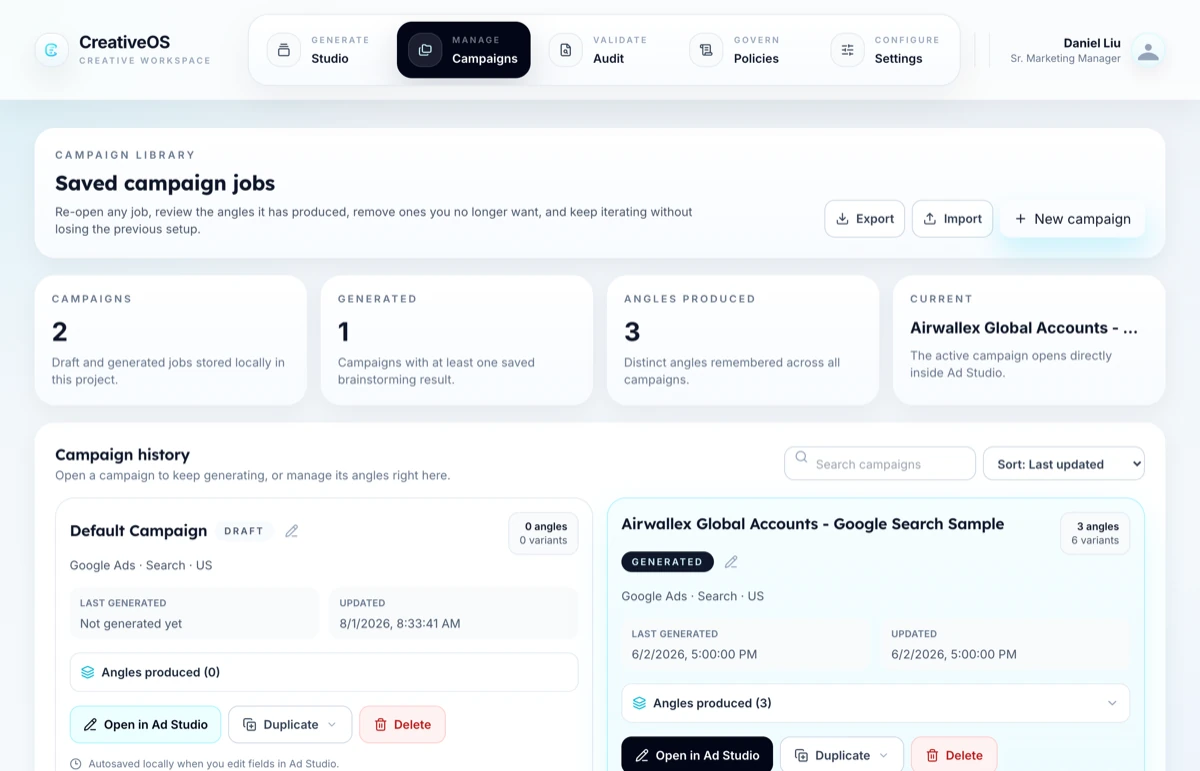
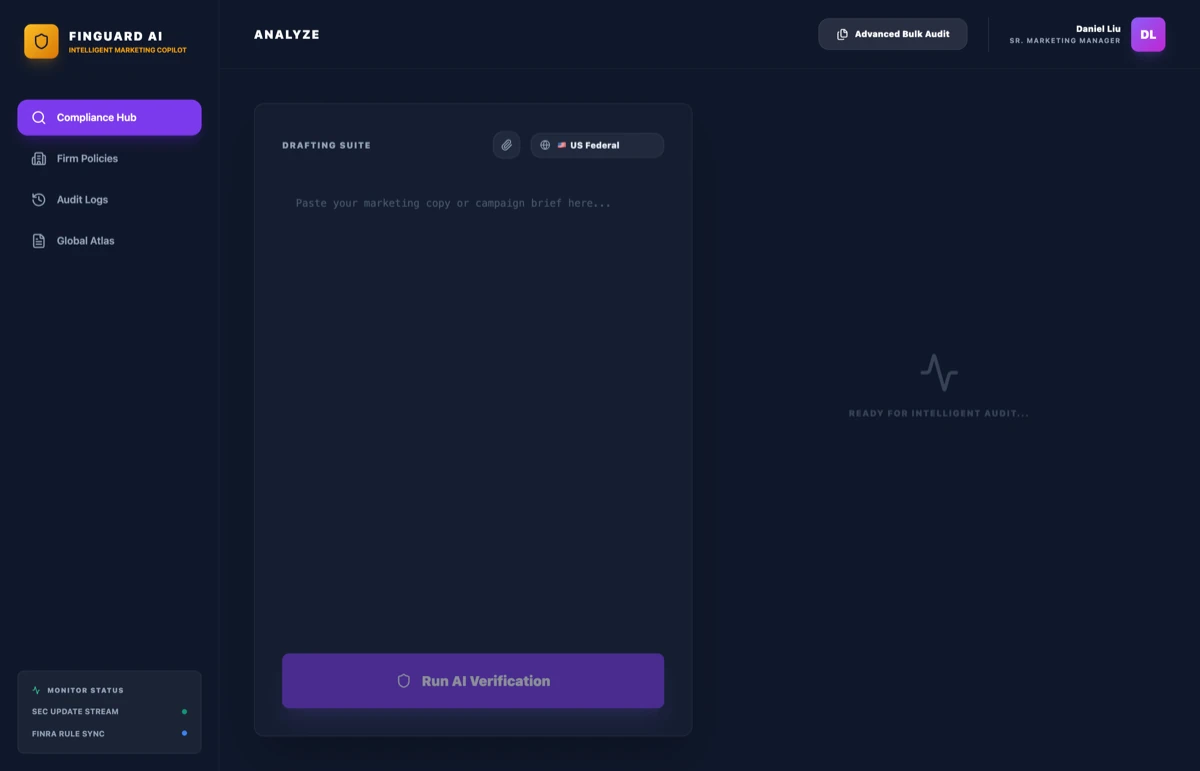
Catch the non-compliant phrase before legal does
ReactTypeScriptViteTailwindGemini FlashVercelPaste a fintech marketing draft, pick the jurisdiction, and get a severity-ranked audit: every risky phrase quoted and matched to the FINRA 2210 clause it trips.
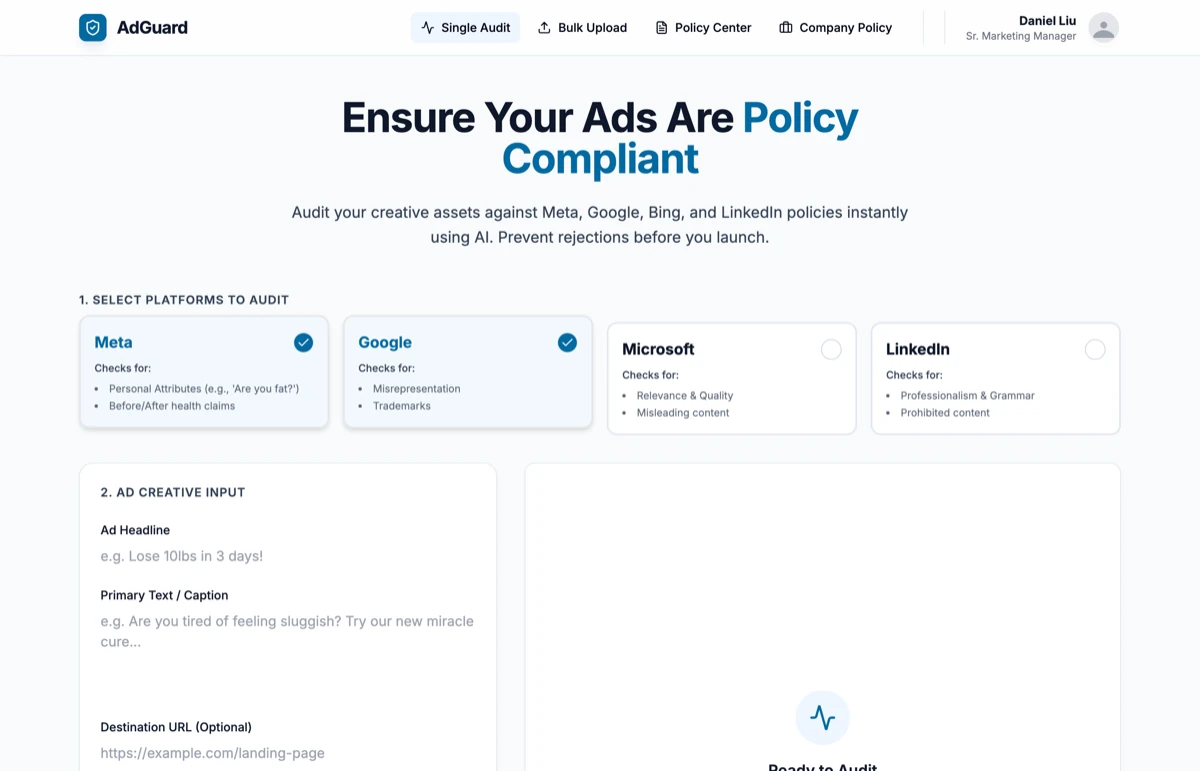
Find the policy violation before the platform does
ReactTypeScriptViteTailwindVercel FunctionsHeadline, body, URL and the creative itself, audited against ~84 embedded platform policy clauses plus your saved company rules. You get a safety score with every risk explained, before upload.
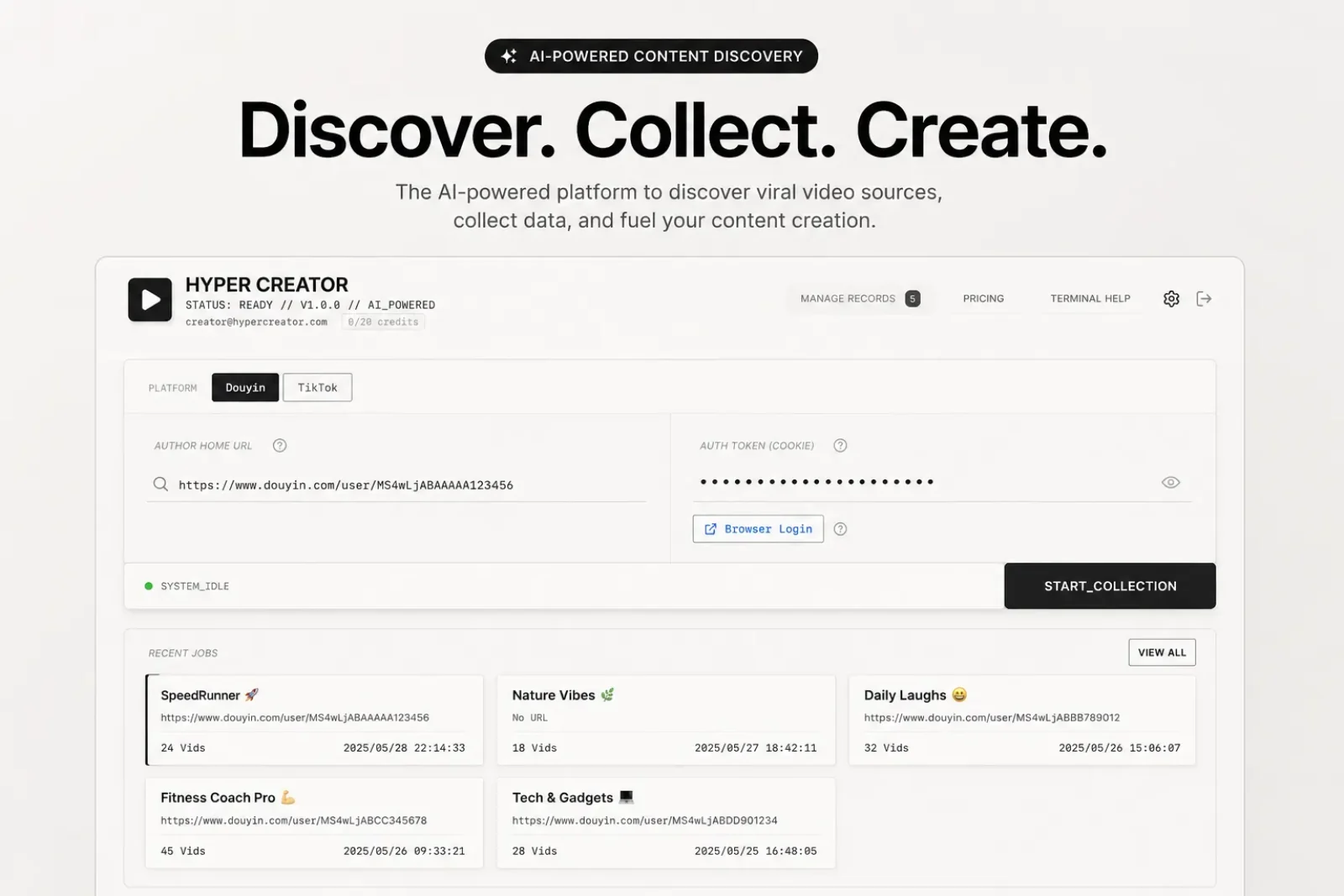
Pull a creator's whole catalog, get the transcripts out
ReactTypeScriptVite Express
 Neon PostgresGemini 2.5 Flash
 FFmpeg
 Playwright
 Resend
 StripeVercel
Paste a Douyin or TikTok profile and it collects the catalog, lifts the transcript from every video, translates and rewrites on your own prompt, then exports to Excel. Every run uses the user's own session, so accounts stay safe.
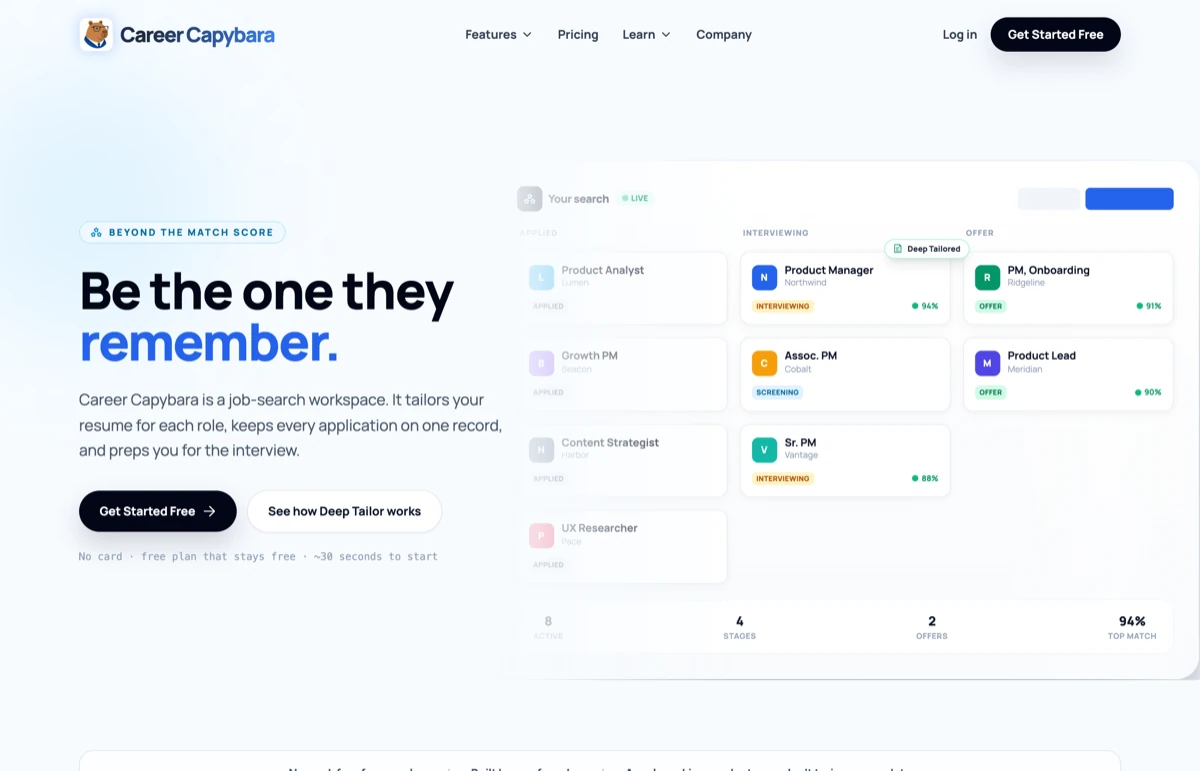
Applications, resumes and interviews in one workspace
React 19TypeScriptViteExpress 5 PrismaGemini 2.5DeepSeek
 GPT-4o · WhisperStripeVercel
One pasted job description becomes a tracked application, a resume run through a six-step tailoring engine with its ATS read-out, and interview prep built from the same context.
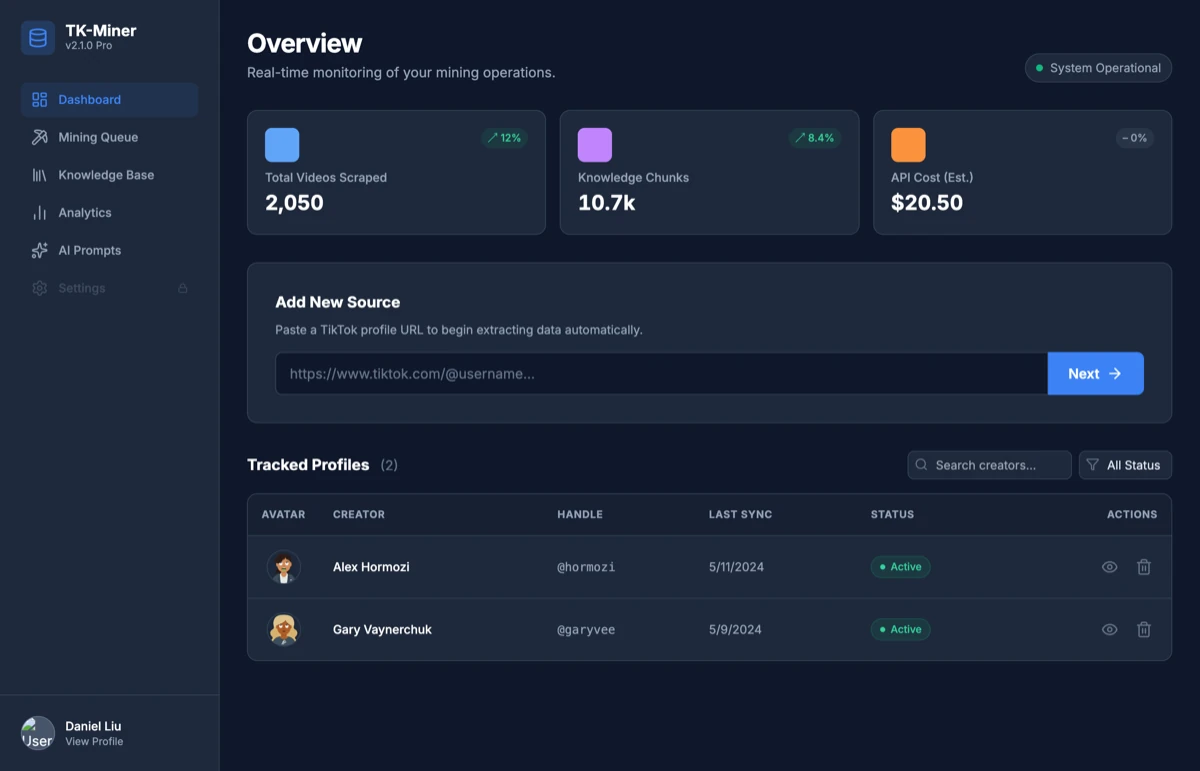
Turn a creator's whole catalog into something you can ask questions of
React 19TypeScriptViteExpressNeon PostgresGemini 2.5 FlashFFmpegPlaywrightStripeVercelAn ETL pipeline scrapes the catalog, strips and transcribes the audio, and embeds everything into a vector store, a Digital Brain you query instead of three hours of scrolling.
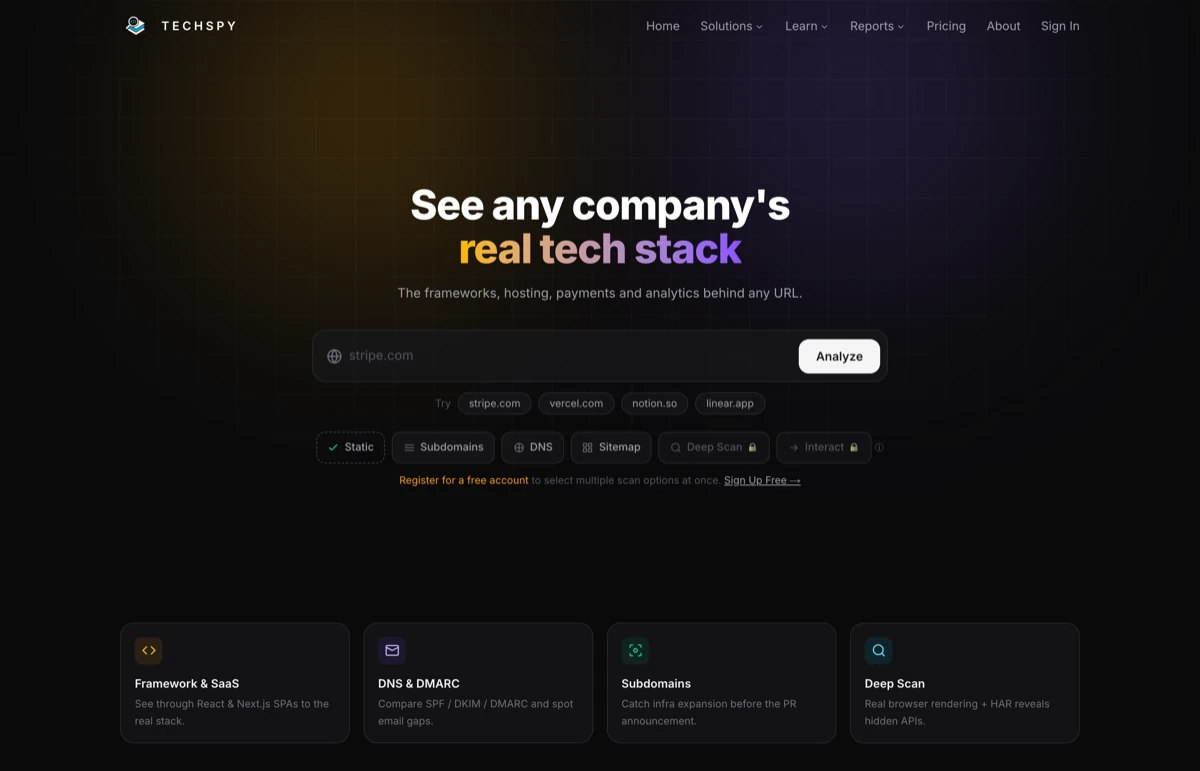
See the real tech stack behind any competitor's URL
 Next.js 16React 19TypeScriptDeepSeekPlaywright
 BrowserlessStripeVercel
Fingerprints the HTML and JS bundles, reads DNS and email posture, maps subdomains, then renders the site in a real browser for a deep scan. Every finding is evidence-backed.
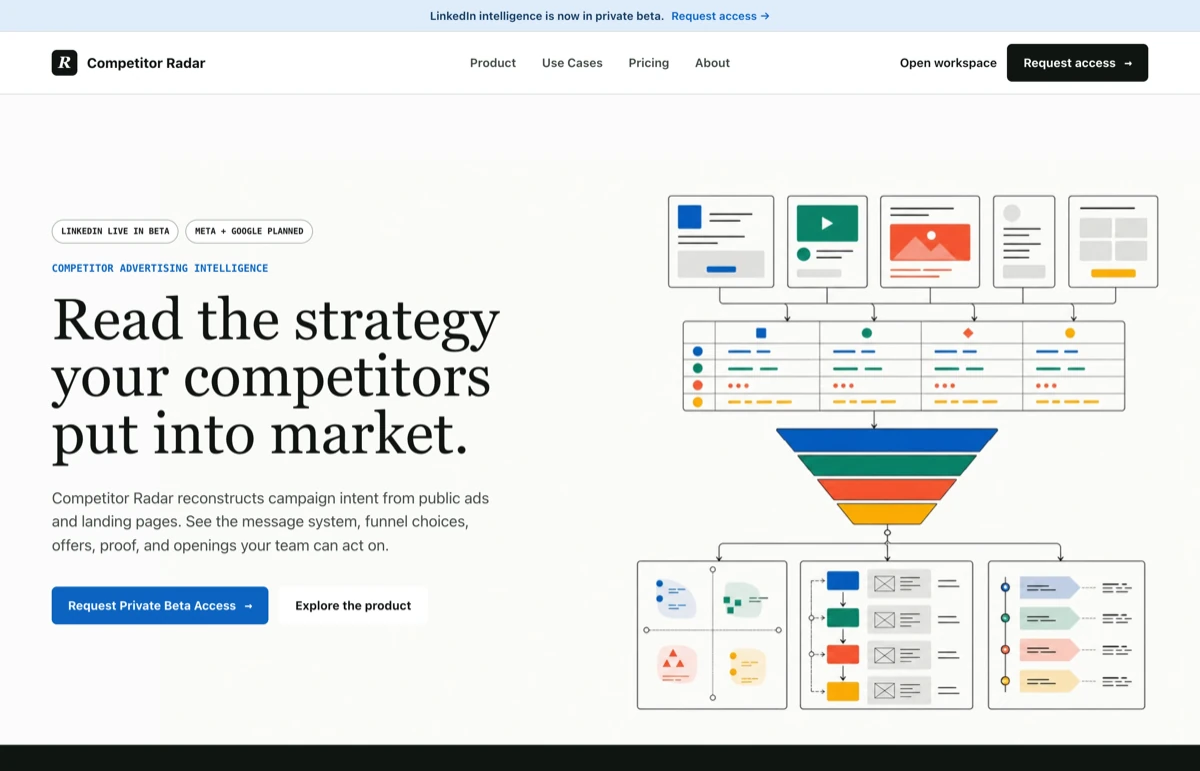
Read the strategy your competitors put into market
 PythonDeepSeekPlaywright
 Meta Graph API
 Ads TransparencyStripeVercel
Collects a rival's public ad library, enriches every creative and landing page, labels the set with AI behind a human review queue, and returns a campaign anatomy: market, message, spend posture.
The same four layers, written up in full
The case studies show the method running inside a company, with other people in the loop. The writing shows the reasoning before the result was known, which is the harder thing to fake.
What is running, what is piloting, what I am not claiming
The machinery exists as archived runs and human-gated proposals in a repository. The lift is internal so far, and I would rather leave a cell blank than invent a figure.
What is proven outside my own seat
The numbers with other people in the loop come from programs I ran: a revenue line from $2M to $250M+, lead handoff from roughly twelve hours to one or two minutes, and a monthly close from one to two hours down to under five minutes.
What I am not claiming yet
There is no external before-and-after on the agent machinery. The share of my week it handles is my own estimate and is labeled as one wherever it appears. The collaboration layer is a pilot, and it says so on every page that mentions it.
Hand me one function and I will build all four layers under it
Personas are markdown and the rubric is one file, so the same machinery retunes to a new team by editing text, no rebuild.