I built the messaging system, CRM workflow, and account-intelligence layer that helped BD teams stay relevant with banks, aggregators, and channel partners over months-long sales cycles.
Enterprise deals in this business looked nothing like the SMB motion. The buyers were banks, accounting firms, ecommerce aggregators, and global channel partners: organizations that moved slowly, scrutinized risk, and cared deeply about compliance, infrastructure reliability, and trust.
Before I stepped in, marketing had almost no real enterprise operating layer. There was no enterprise website, no clear API or partnership narrative, no ABM structure, and no system for keeping buying committees warm between BD conversations.
That left BD teams relying on personal networks, one-off materials, and SMB-oriented messaging that did not match how enterprise buyers evaluated vendors. The job was not to launch a campaign. It was to build the infrastructure an enterprise motion could actually run on.
Enterprise buyers expected proof, not just positioning. The story had to hold up across compliance, licensing coverage, security, and API reliability, and every touchpoint needed to reinforce the same enterprise-grade narrative.
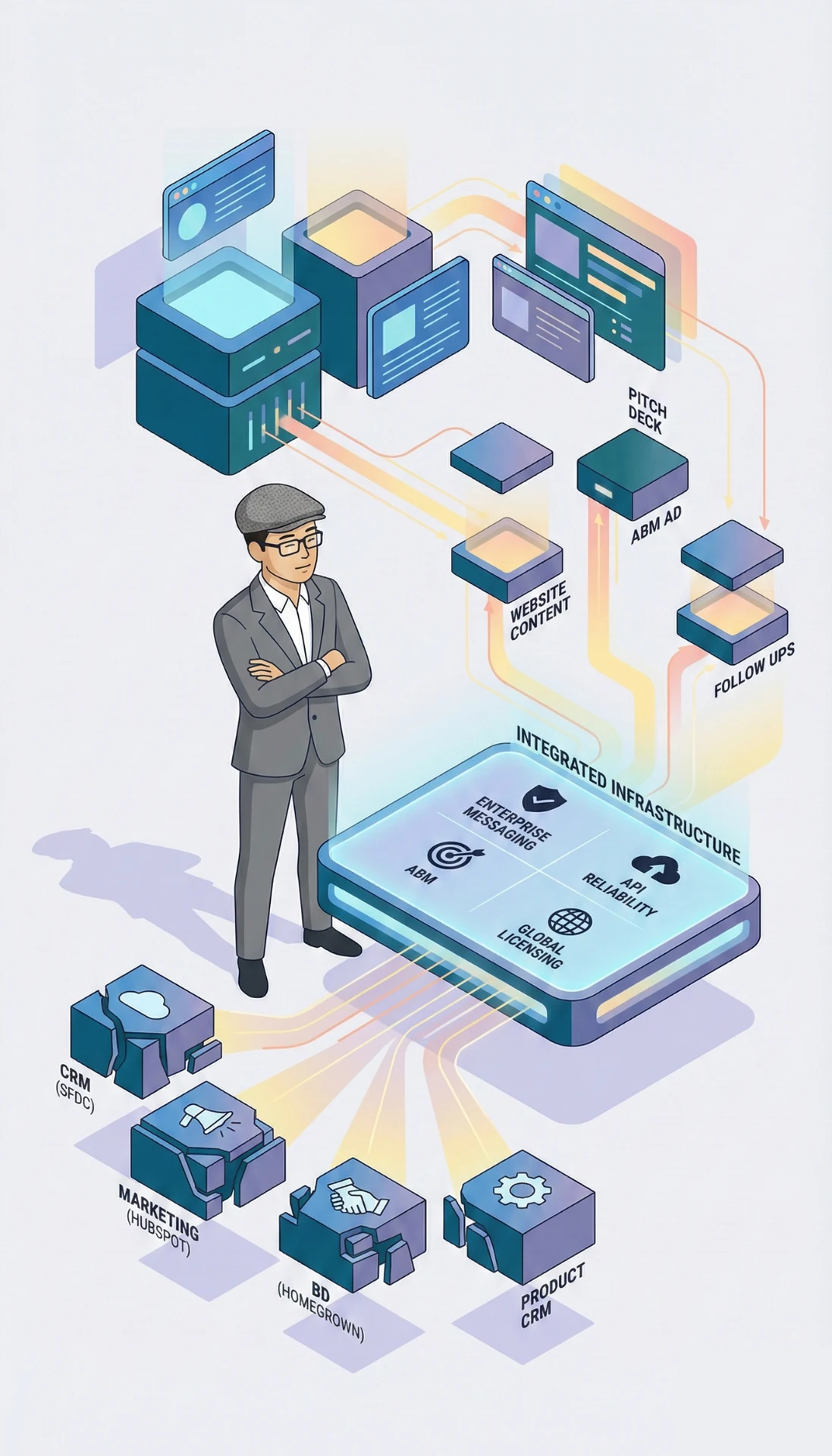
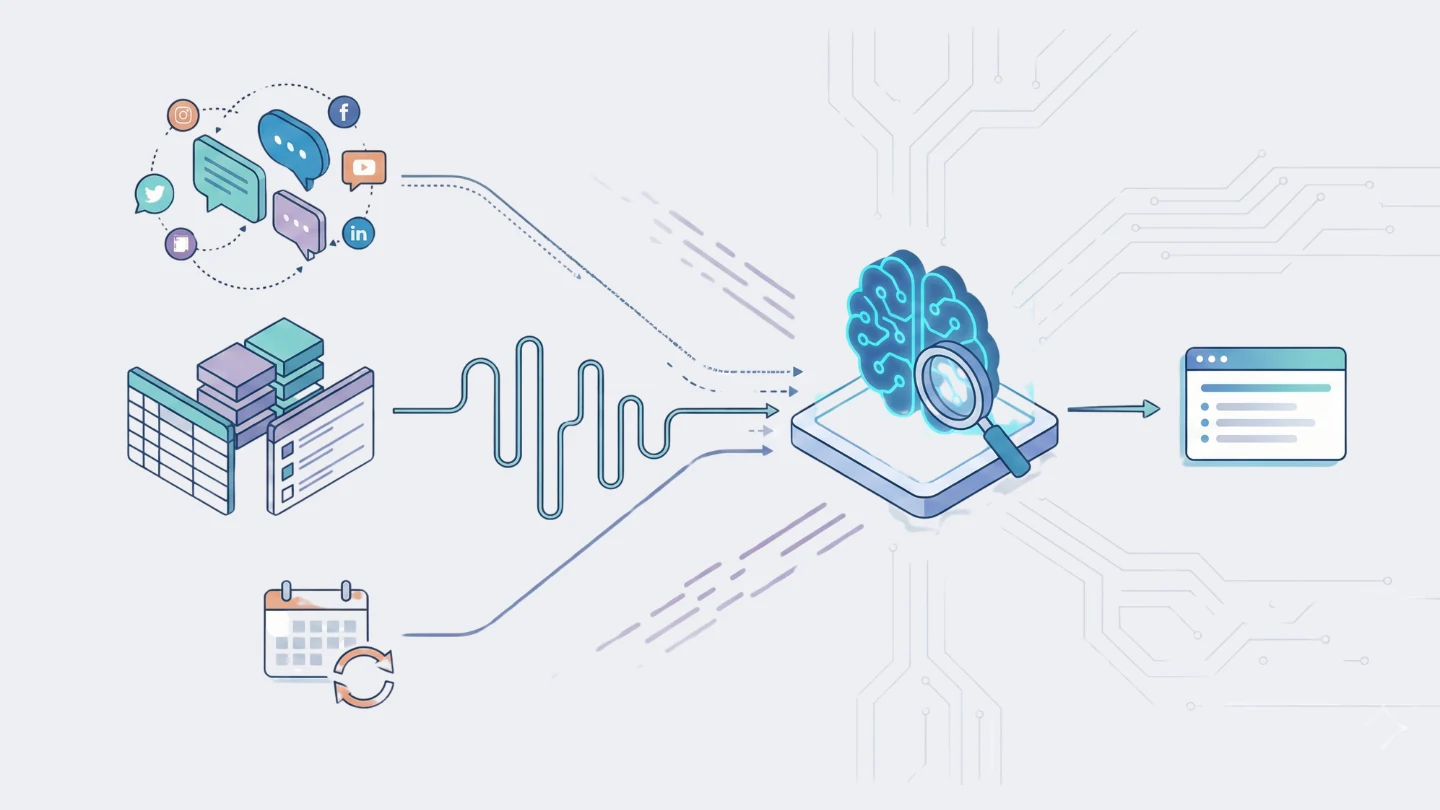
The stack was fragmented. BD tracked deals separately from the broader marketing motion; marketing moved through HubSpot, ZoomInfo MarketingOS, and later 6sense; product data lived in a homegrown CRM. I connected the gaps with automation so intent, engagement, and account context could move between systems.
The hard part was orchestration. Messaging, content, CRM workflows, ABM audiences, and BD outreach all had to work as one motion. The result needed to support long-cycle relationship building, not just top-of-funnel activity.
The foundation was a dedicated enterprise narrative system: a separate website experience, modular pitch materials, ABM creative, and supporting workflows built around the priorities of high-value partners.
Everything from tone to proof points was rebuilt for enterprise audiences. I worked with design, product marketing, and content teams to create a site and deck structure that matched how banks, accounting firms, aggregators, and channel partners actually evaluated us.
The deck mirrored the site: a core company story, a flexible middle section by vertical, and a BD-customizable closing layer. That made it possible to tailor conversations by account type without losing narrative consistency.
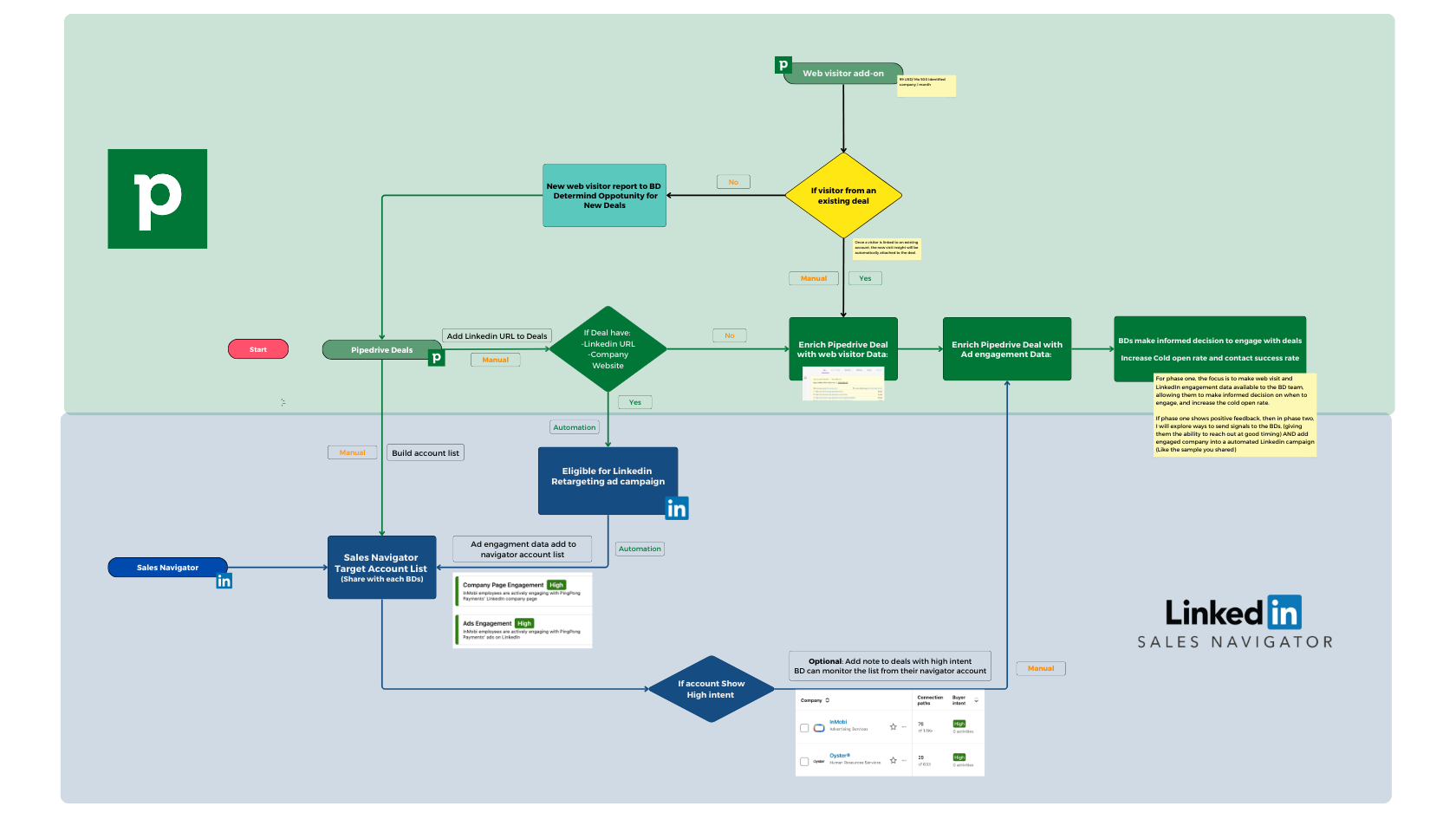
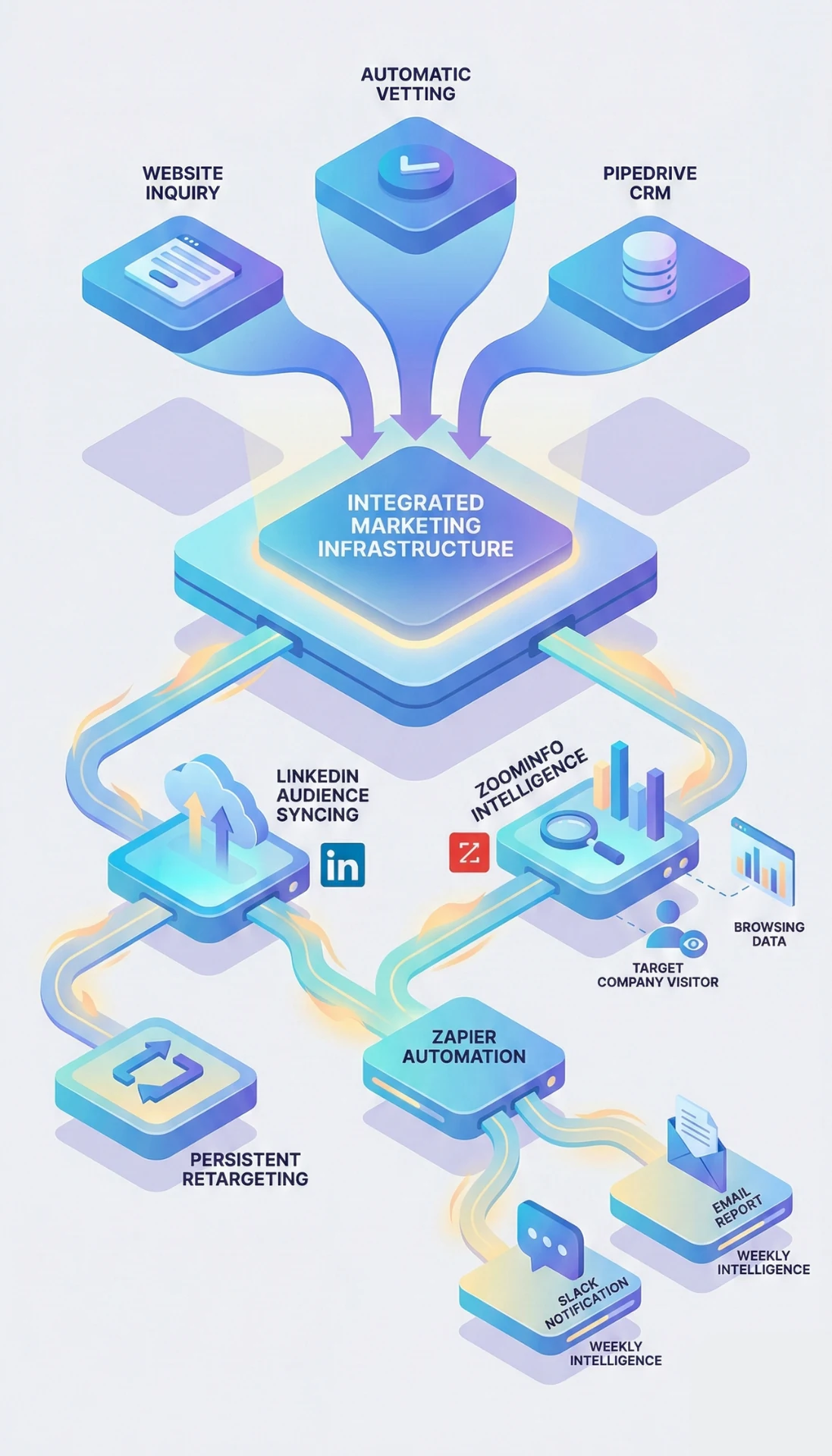
Once the narrative system was in place, I came in and connected it to the new marketing infrastructure (automation, CRM and other tech-stack). Every enterprise inquiry which come from website automatically vetted, and logged to Pipedrive and became part of our ABM campaign retargeting audience through audience syncing on LinkedIn, enabling persistent, always-on impression-level engagement.
I want to make sure all Enterprise decision-makers (entire buying committe) to see our brand repeatedly through different channel (high expression frequency) during the long gaps between BD conversations, and ABM served as the connective tissue that kept our brand and capability in their consideration set. To reinforce this, the new enterprise website was integrated directly with Linkedin campaign, and Pipedrive so that any form submissions or engagements were attributed to the correct account, and ZoomInfo’s visitor intelligence illuminated which target companies were actively browsing our enterprise content.
BD leaders receive weekly intelligence reports from my automated zaiper automation through Slack and email, giving them insight into which accounts were warming, which verticals were responding, and what timing might be optimal for the next outreach. The system didn’t replace BD’s relationship-driven approach. It amplified it.
Marketing became part of the deal cycle, not by generating leads, but by shaping perception, reinforcing trust, and providing the infrastructure that nurtures enterprise prospects over months, not days.
A successful ABM strategy required tight alignment across teams who typically operated separately. BD guided vertical focus, deal patterns, and the nuances of partner expectations.
Product marketing shaped the technical narrative around API integration, compliance readiness, and infrastructure reliability. Design ensured that every element. From website to deck to ABM creatives—reflected a consistent visual and narrative identity.
Engineering supported the integration between Webflow, Pipedrive, and ZoomInfo, creating a feedback system BD could depend on.The collaboration created a unified model where BD’s relationship expertise and marketing’s system design worked in concert.
Instead of BD improvising materials or messaging, every touchpoint aligned with a broader architecture designed specifically for enterprise credibility.
Enterprise growth does not behave like a traditional demand gen funnel. Progress comes from repeated proof, consistent messaging, and enough system support for BD teams to stay credible over a long buying cycle.
By building the ABM and BD infrastructure together, I gave relationship-led teams better materials, better timing signals, and a cleaner way to keep target accounts engaged between conversations.
This project showed the kind of work I like most: using marketing, systems, and operations to make a high-stakes GTM motion more coordinated, more visible, and more trustworthy.